Size. Weight. Power. Cost. Availability.
Availability is the mission-critical design parameter in defense power electronics.
Why Availability Matters More Than Ever
For decades, defense acquisition prioritized achieving the highest possible technical performance. If a system delivered superior capability, program timelines could often absorb longer development cycles or more complex supply chains.
Today’s threat environment is different.
Imagine a nation facing an active conflict. Military planners identify a capability gap—whether electronic warfare, counter-UAS, ISR, communications, or power generation—and need to field additional systems quickly. In that scenario, the most advanced technology on paper may not be the most valuable technology available.
A solution that requires years to scale production, relies on constrained components, or depends on fragile supply chains may offer impressive specifications, but it cannot contribute to the mission if it cannot be delivered when needed.
The reality of modern conflict has reinforced a simple lesson: capability delayed can become capability denied.
This is why availability has emerged as a strategic consideration alongside traditional SWaP-C metrics. Defense organizations increasingly evaluate not only what a system can do, but also:
- How quickly it can be produced
- Whether critical components are obtainable
- How easily production can scale
- Whether sustainment can be maintained over years or decades
- How resilient the supporting supply chain will be during periods of disruption
The question is no longer simply, “What is the best technology?”
Increasingly, it is:
“What is the best technology we can reliably field, sustain, and scale when it matters most?”
The Hidden Risk of Optimizing Only for SWaP-C
Many defense programs still optimize aggressively around performance metrics and unit cost without fully accounting for long-term manufacturability and sustainment realities.
That can create unintended consequences:
- Designs dependent on fragile component supply chains
- Architectures difficult to scale into production
- Long lead-time materials constraining deployment schedules
- Obsolescence exposure early in program lifecycle
- Sustainment bottlenecks years after fielding
A power supply that delivers exceptional efficiency but relies on constrained components may ultimately introduce more operational risk than a slightly less optimized solution designed around resilient sourcing and manufacturability.
Similarly, a highly customized architecture may achieve near-term performance goals while creating long-term sustainment challenges that impact readiness and lifecycle cost.
As defense acquisition timelines compress and modernization cycles accelerate, these risks become increasingly difficult to absorb.
SWaP optimization without availability awareness is a dead end.
Availability as a Design Philosophy
The concept of SWaP-CA reframes availability as something engineered into a system from the beginning.
That includes considerations such as:
- Component lifecycle planning
- Multi-source part strategies
- Domestic manufacturing capability
- Production scalability
- Design-for-testability
- Obsolescence mitigation
- Sustainment readiness
- Trusted supplier ecosystems
- Manufacturing process maturity
This approach does not replace SWaP-C priorities. It extends them.
Historically, the primary question was:
Can this design achieve the required performance?
Today, availability requires a broader perspective:
Can this design be produced, delivered, sustained, upgraded, and supported when the mission requires it?
In other words, performance alone is no longer sufficient. A system that meets all technical requirements but cannot be manufactured at the required rate, sourced from trusted suppliers, or sustained throughout its lifecycle may still fail to meet operational needs.
Availability therefore encompasses not only uptime and reliability, but also the ability to deliver capability when and where it is needed.
Electrification Is Raising the Stakes
The transition toward increasingly electrified defense platforms is amplifying the importance of SWaP-CA.
Modern systems are integrating:
- AI processing at the edge
- High-speed sensor fusion
- Advanced communications
- Electronic warfare payloads
- Autonomous control systems
- High-density embedded computing
These technologies dramatically increase power conversion demands while imposing severe constraints on thermal performance, size, and weight.
As a result, defense power supply manufacturers are being asked to deliver:
- Higher power density
- Greater efficiency
- Lower thermal signatures
- Improved EMI performance
- Enhanced reliability in harsh environments
But technical optimization alone is not enough if the supporting supply chain and manufacturing ecosystem cannot keep pace.
Programs increasingly require partners capable of transitioning rapidly from engineering development into low-rate initial production, then scaling into long-term sustainment without sacrificing quality or responsiveness.
That transition capability is becoming a differentiator in itself.
The Role of Domestic Manufacturing and Vertical Integration
Availability is deeply connected to manufacturing strategy.
Defense organizations are placing renewed emphasis on domestic production capability, trusted supply chains, and resilient industrial capacity. Recent geopolitical instability and supply disruptions have reinforced the importance of maintaining manufacturing visibility and control.
For power electronics suppliers, this means investments in:
- Advanced manufacturing infrastructure
- In-house engineering
- Integrated test capability
- Production scalability
- Long-term program support
At Rantec, this philosophy has shaped both operational strategy and technical investment, which we have written about previously.
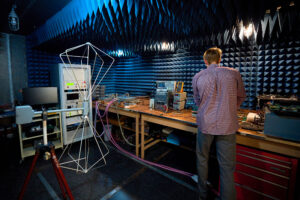
The company maintains full in-house engineering and test capability spanning electrical, mechanical, and environmental disciplines. Advanced manufacturing and automated test infrastructure support the transition from development through sustainment production.
This vertically integrated approach enables tighter control over:
- Quality
- Configuration management
- Production responsiveness
- Test validation
- Obsolescence mitigation
- Long-term supportability
Just as importantly, it creates stronger collaboration between engineering, manufacturing, and customers during critical phases of program execution.
Availability and the Future of Defense Acquisition
SWaP-CA also aligns with broader acquisition trends across the defense industry.
Open architectures, modular systems, rapid integration initiatives, and OTA-driven development models are all designed to accelerate capability deployment. But rapid acquisition introduces new pressure on suppliers to deliver both technical innovation and manufacturing readiness simultaneously.
Programs can no longer afford:
- Multi-year redesign cycles due to obsolete components
- Production bottlenecks caused by constrained supply chains
- Sustainment gaps from unsupported architectures
This is particularly important for platforms expected to evolve continuously through software upgrades, sensor modernization, and capability insertion over extended operational lifecycles.
Power conversion systems sit at the center of that evolution.
A resilient power architecture is no longer simply a supporting subsystem — it is foundational infrastructure for the entire platform.
Beyond Specifications
The defense industry has historically rewarded technical performance above all else. That mindset drove extraordinary innovation in aerospace and military electronics.
But the next generation of defense capability requires a broader definition of optimization.
The most successful systems of the future will not simply be smaller, lighter, more efficient, or lower cost.
They will also be manufacturable, sustainable, supportable, scalable, and available when needed.
That is the core idea behind SWaP-CA.
Availability is not separate from mission success. It is increasingly central to it.
Conclusion: The Next Evolution of Power Conversion Strategy
As defense systems become more software-defined, electrified, and operationally distributed, the demands placed on power electronics will continue to grow.
The companies best positioned to support this transition will be those capable of balancing advanced technical performance with long-term production and sustainment realities.
That requires a shift in thinking – from designing only for SWaP-C, to designing for SWaP-CA.
At Rantec, availability is not viewed as a downstream procurement concern. It is treated as part of the engineering challenge itself — integrated into manufacturing strategy, supply chain planning, test capability, and long-term customer support.
Because in modern defense systems, the best-performing solution is only valuable if it can also be delivered, sustained, and trusted over the life of the mission.